White Papers
Customer Experience in an Age of Tariff Turbulence: How E-Commerce Brands Can Build Resilience Through CX Enhancements

27 May 2025
Tariffs are driving up product costs by 5% – 10%, forcing brands to either absorb the increase or pass it on to consumers—each path carrying its own CX risk. Meanwhile, brands that invest in experience enhancements can unlock 2% – 7% revenue gains despite the pressure. Shifting trade policies and rising costs are no longer just supply chain concerns — they now directly impact customer expectations, loyalty, and conversion.
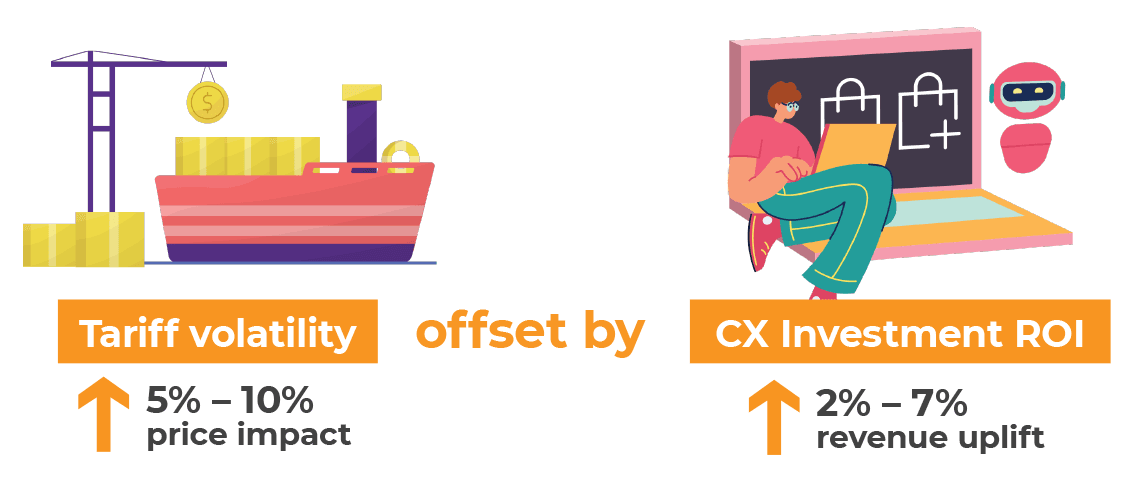
Tariff volatility ↑ (5% – 10% price impact) offset by CX investment ROI ↑ (2% – 7% revenue uplift)
The New Reality of Tariff Uncertainty
Across global markets, tariffs are no longer rare regulatory blips — they are recurring forces disrupting both costs and customer confidence. Recent headlines have made this reality visible: In 2025, for instance, platforms like Shein implemented price hikes in the US in anticipation of new import tariffs. This change echoed warnings from Bank of America and other analysts predicting material increases in consumer prices.
For brands, this isn’t just an operational nuisance. Customers expect price transparency, predictable delivery, and frictionless service. Tariff-induced changes, especially those that go unexplained, disrupt this expectation. Fees at checkout, delays at customs, or complex return processes become CX liabilities if not preempted.
CX leaders are now positioned as frontline stewards of trade resilience. From checkout design to post-purchase recovery, their role is to ensure tariff volatility doesn’t erode loyalty. This requires a CX strategy that is not just reactive but anticipatory — built on visibility, transparency, and operational readiness.
Tariff Impact Across the Customer Journey
As tariffs reshape operational realities, their effects ripple through every phase of the e-commerce journey. Understanding where and how these disruptions surface is essential for identifying the most critical opportunities to safeguard the customer experience.
At the browsing and discovery stage, tariff-driven price changes or product unavailability may dissuade shoppers before they reach checkout. Limited inventory due to import restrictions or higher upfront costs can lead to an early drop-off.
During checkout, unexpected duties and fees are a key trigger for cart abandonment. According to Baymard Institute, 39% of shoppers cite “extra costs” as the top reason they abandon carts — an insight echoed in their other report, which highlights that surprise fees remain a dominant factor in cart abandonment.
Shipping and delivery create further points of tension. Delays caused by customs clearance or documentation gaps undermine customer confidence. Customers may be asked to pay cash on delivery for fees they didn’t expect, creating frustration or even refusal to accept the package.
When it comes to returns, tariff-related friction increases. Many customers face complex customs documentation to send products back, or are denied full refunds due to unreimbursed duties. This turns post-purchase experiences into moments of regret and distrust of the brand.
Download our white paper, which explores how tariff volatility affects the digital customer journey, and why targeted, practical CX enhancements are key to building resilience, driving growth in global e-commerce, and deepening customer trust.