Blogs
GenAI in Telehealth (Part 2): Use Cases for Revenue Optimization

22 June 2025
By Lianne Dehaye
TDCX AI Senior Vice President
Telehealth or telemedicine has evolved from being a stopgap solution to a strategic advantage. In the US alone, 88% of physicians say they’ve improved access to care, while 94% of patients (despite some reservations) already expect it to be part of their healthcare options.
In our previous article, we explored how generative AI (GenAI) can be used to improve patient support — from intelligent triage, voice-based virtual agents, and context-aware conversational chatbots to support tools for customer experience (CX) agents and healthcare frontliners.
The advancements don’t stop at better patient support. GenAI also presents new opportunities for healthcare providers and HealthTech brands to grow revenue more sustainably by creating and delivering more value out of their products or services. By recommending personalized services, automating post-consultation engagement, and enabling premium care models like remote patient management, GenAI can drive both clinical value and financial performance.
Rethinking revenue optimization in telehealth from frequency to value
In traditional telehealth models, revenue is often tied to volume, such as the number of consultations delivered per day, per provider, or per platform. Advancements in virtual care and changes in patient expectations are driving a shift toward more purposeful, quality-focused, and outcome-driven interactions. In the US, for example, value-based offerings in commercial healthcare plans have grown by 50% since 2018, while nearly 40% of telemedicine visits now involve moderate to complex cases.
Revenue optimization now entails increasing patient lifetime value while improving outcomes. It’s about delivering the right service at the right time, based on a patient’s clinical needs, preferences, and care goals.
GenAI can further improve these by helping providers highlight relevant, timely services, such as preventive screening, personalized nutrition plans, or premium remote monitoring support. These aren’t sales or upselling for the sake of margin, but clinically appropriate extensions of care that meet real needs.
On the back end, revenue optimization becomes a function of operational intelligence. It’s a shift from consult-based billing to service orchestration. When integrated with electronic health record (EHR) and customer relationship management (CRM) systems and other patient engagement platforms, GenAI can analyze structured and unstructured health data to assess needs, preferences, and behaviors as well as recommend next-best actions across the care journey.
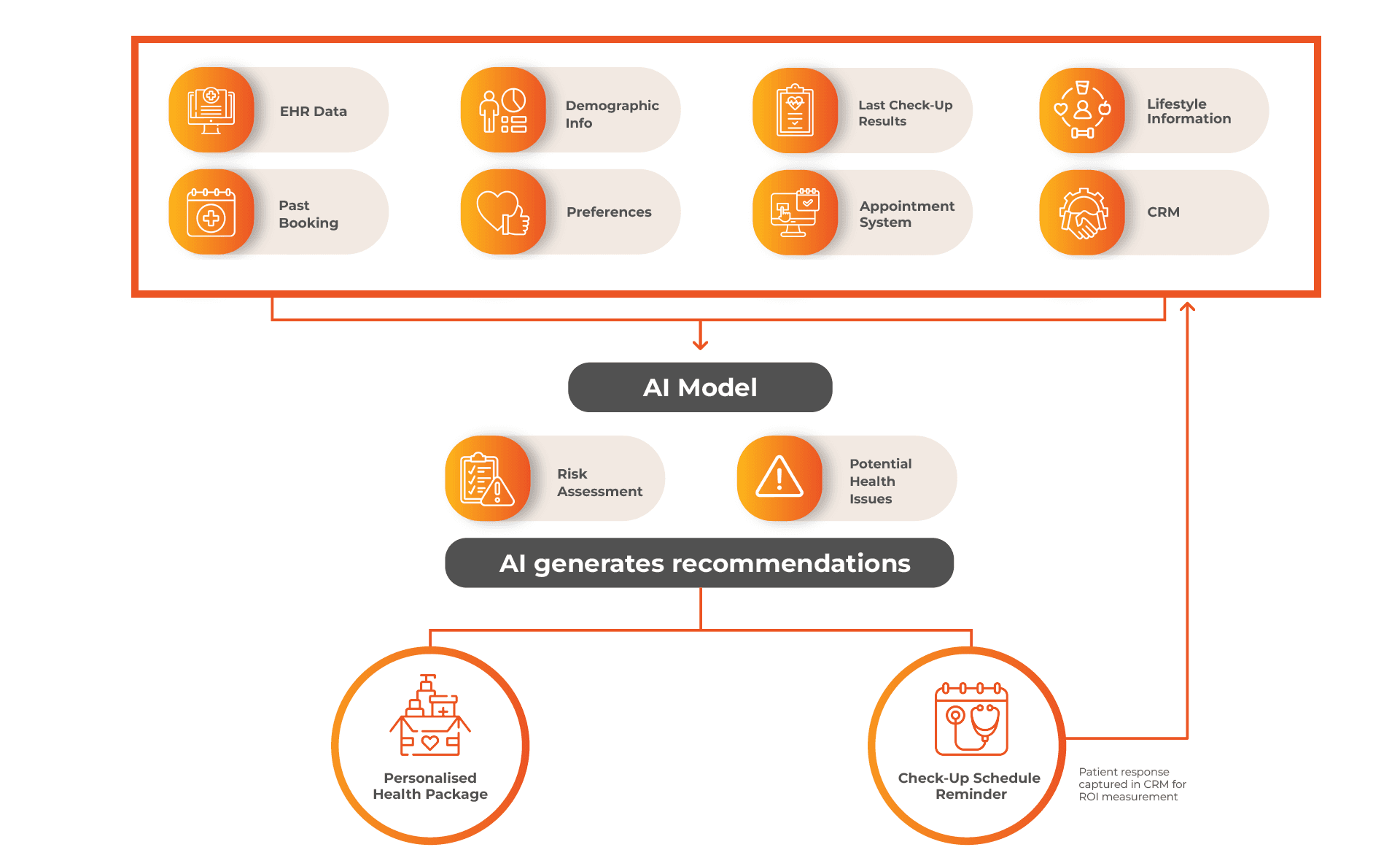
Figure 1: Visualized workflow of how GenAI can be used to maximize the value of preventive check-ups and health screenings
GenAI-driven telehealth revenue optimization: Use case for preventive check-up and health screening recommendations
Missed appointments can cost practices and physicians between US$23,000 to US$150,000, while patients who miss one are 70% more likely not to return within the next 18 months. No-shows and delayed screenings are lost opportunities not just for revenue, but for early intervention.
GenAI provides a way to bridge these gaps by proactively surfacing tailored, evidence-based recommendations and turning them into scheduled actions. Unlike post-consultation follow-ups, this use case focuses on anticipatory care, with GenAI flagging potential lapses or delays in preventive care. In fact, these personalized nudges have already helped a recognized hospital improve the enrolled patients’ medication adherence by up to 97%. This also turns routine check-ups into a strategic growth lever, particularly for subscription-based or value-based care models.
From the patient’s point of view, these would be timely, relevant, and omnichannel reminders that reflect their health journey. It might appear in their app or inbox as a personalized suggestion that outlines relevant screenings, available time slots, and an easy way to book.
Behind the scenes, GenAI systems ingest and analyze data from multiple sources, such as those from EHRs, previous lab results, demographic attributes, booking history, lifestyle indicators, and CRM activity. The model applies real-time risk scoring techniques, cross-referencing health profiles against clinical guidelines and stratification frameworks.
This enables the system to identify overdue or recommended screenings based on individual risk factors. For example, instead of hard-coded age triggers, the engine uses historical data and patient-specific trends to trigger timely check-up prompts. It then generates a compliant, patient-friendly message, along with personalized health packages or suggested screenings. When connected to CRM and appointment scheduling systems, GenAI can offer actionable next steps, such as preferred appointment slots, recommended care bundles, or teleconsultation follow-ups. Patient responses and engagement metrics feed back into the AI pipeline, enabling continuous learning and ROI attribution.
GenAI-driven telehealth revenue optimization: Use case for consultation services
The post-consultation phase is a pivotal but often an underutilized moment in telehealth. Fewer than 25% of patients, for instance, had a follow-up within 30 days after a consultation, a gap that could undermine treatment adherence and long-term care.
GenAI helps transform this phase into a more continuous, personalized care journey that extends support beyond the consult and strengthens long-term health outcomes. In this use case, GenAI anticipates the patient’s needs after the visit and follows through on the next steps. By automatically generating personalized summaries, adjusting follow-up plans, and recommending relevant wellness resources, GenAI supports more effective care while also creating new opportunities for patient-centered, sustainable revenues.
To the patient, AI-enhanced consultations reinforce continuity. After a virtual visit, for instance, they’re guided through their healthcare plans, clarifying medications, and providing condition-specific lifestyle advice. From there, the experience can branch off into other interactions. The system can enable them to book a follow-up at the optimal time, for example. Instead of being promotional clutter, relevant add-ons, like virtual nutrition coaching or wellness webinars, are presented as part of the care journey.
An integrated managed care company operating more than 40 hospitals and 614 medical offices in the US already uses this AI-assisted workflow. In their pilot, it led to better documentation and less administrative strain. Notably, 81% of patients in the study felt their doctor was more present during visits.
On the back end, GenAI outputs can include confidence scores or reference rationales that enable clinicians and HCPs to review and validate them before they’re delivered to the patient. This ensures that recommendations stay explainable and auditable. Architecturally, this would rely on modular AI pipelines, with separate models handling summarization, risk analysis, and business/decision logic to ensure outputs meet both regulatory and operational thresholds. When integrated with patient engagement platforms, GenAI can surface medically appropriate, context-aware services across the patient’s preferred channels, with delivery governed by HIPAA- or GDPR-compliant systems.
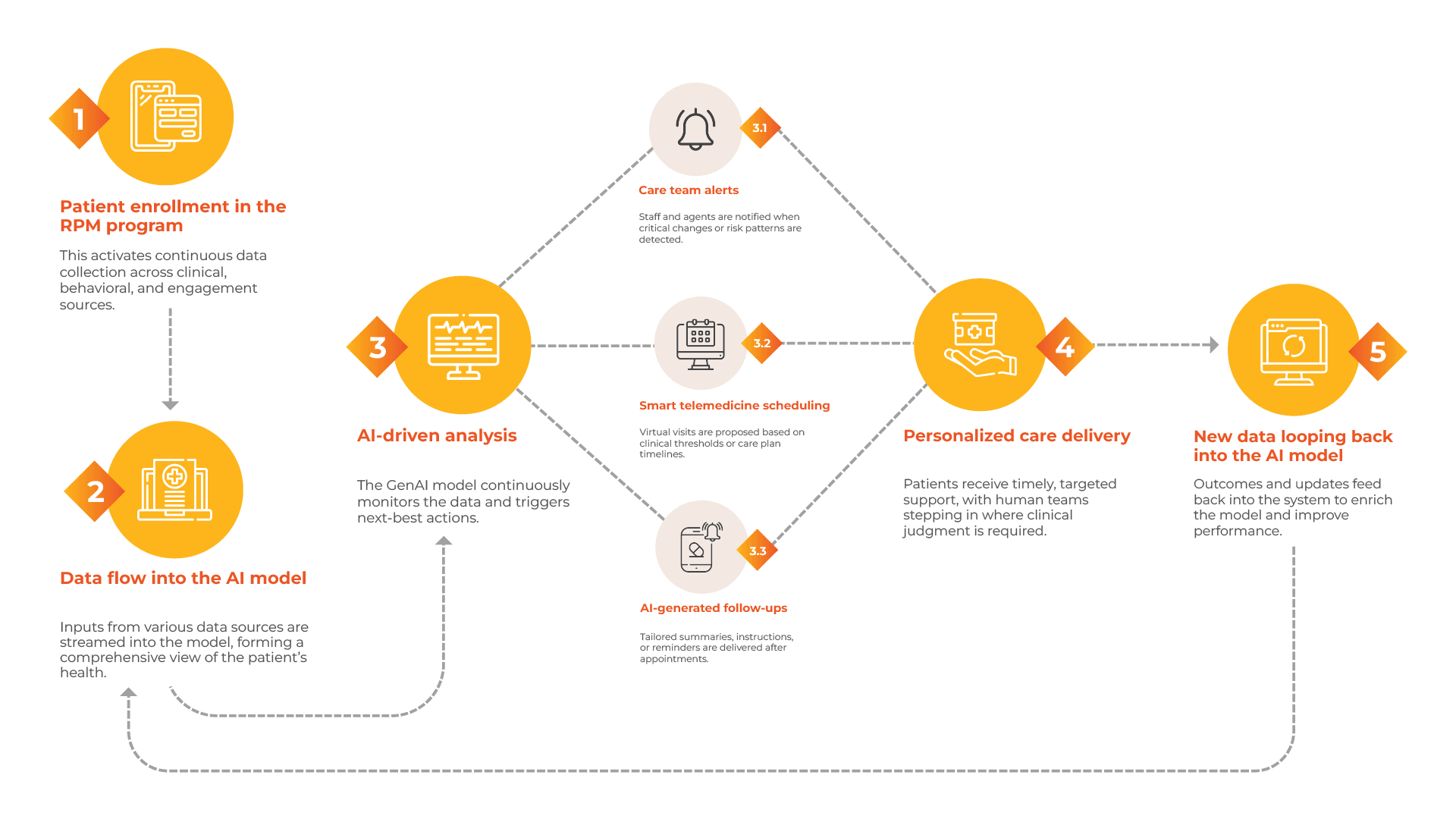
Figure 2: Visualized patient journey showing how GenAI can be used to scale remote patient management (RPM) as a premium service to patients
GenAI-driven telehealth revenue optimization: Use case for remote patient management
RPM is evolving beyond a clinical safety net into a viable business model, what with patient adoption in the US growing nearly 11% annually from 2022 to 2024, and nearly 40% of Americans now using wearable devices to track their health. With growing demand for at-home care and personalized monitoring, healthcare providers and HealthTech brands are bundling RPM services as part of premium care offerings. These can include concierge services, wearable device rentals, priority teleconsultation access, and health reports. GenAI makes this scalable by functioning as an intelligent orchestration layer that continuously analyzes multimodal patient data.
This starts with data ingestion and normalization. The system ingests structured and unstructured data from multiple sources, such as EHRs, wearable devices, lifestyle and demographic data, CRM logs, and patient-reported outcomes and preferences. This data is normalized and routed through healthcare-trained, fine-tuned LLMs. From here, HCPs and HealthTech brands can deliver the following:
- Triage alerts: GenAI continuously monitors biometric and behavioral signals. If a deviation crosses a predefined clinical threshold, it triggers an alert. These alerts are enriched with context, such as recent medication changes, and sent to the appropriate care team via API integrations.
- Smart scheduling: The AI system determines when a follow-up is warranted based on predictive models (e.g., readmission risk scoring, medication adherence risk). It proposes a teleconsultation window and syncs this with calendar APIs or patient portals.
- Follow-up generation: After a triggered event or scheduled consultation, GenAI drafts follow-up instructions that incorporate patient history, current symptoms, and care protocols. These are formatted for readability, reviewed by clinicians if required, and sent via the patient's preferred channel (e.g., email, app, SMS).
In effect, the GenAI system doesn’t just observe patient data, but orchestrates actionable care pathways, transforming RPM into an intelligent, scalable, and billable layer of continuous care.
For patients, GenAI-enabled RPM becomes a personalized layer of care that adapts in real time. After enrolling in an RPM plan, patients are equipped with connected devices (such as wearables or home monitors) and onboarded into a care system that works in the background to anticipate their needs.
If the system detects early warning signs, it logs the data and alerts the care team, proposes a telehealth check-in, and delivers tailored follow-up instructions. If the patient skips a medication log or shows decreased activity, they might receive supportive prompts or check-ins scheduled on their behalf. This kind of anticipatory care feels less like a reactive service and more like a concierge model and built around the patient’s real-world behaviors and goals. It’s not the technologies that make it a premium experience, but how seamlessly they bridge everyday life and expert care.
As explored across these use cases, GenAI is a strategic layer that augments how healthcare, HealthTech, and telehealth providers deliver and personalize care. It can help create new touchpoints while also closing the loop between patient outcomes and business performance.
The real advantage lies in operationalizing GenAI — integrating it into workflows, data systems, and care models in a way that respects healthcare’s complexity while enabling new commercial possibilities. Healthcare organizations and HealthTech brands, however, need the domain expertise to define an optimal CX and patient experience, the technical maturity to integrate GenAI across systems like EHRs and CRMs, and the governance models to manage risk, compliance, and trust.
GenAI isn’t useful without the infrastructure to activate it, or the clinical judgment to ground it. When anchored in the right technical systems, grounded in a CX strategy that centers on the patient experience, and aligned with a business model that creates long-term value, GenAI can be the connective tissue between high-impact growth and high-touch care.
Our consulting team works with healthcare organizations to build the technical infrastructure and strategic frameworks that make GenAI implementations successful. If you're exploring how to integrate GenAI into your operations while maintaining focus on patient outcomes, we'd be happy to discuss your specific challenges and objectives.
Contact our consulting team to learn more about our approach to healthcare AI strategy and implementation.