注目の記事
Building Digital Customer Experience Into the Internet of Things
11 January 2026
By Sophie Chelmick
Executive Vice President – EMEA
The global market for the internet of things (IoT) is on track to approach US$991 billion by 2028, with projections pointing toward nearly 40 billion IoT devices in use by 2030. This scale means billions of daily interactions across homes, workplaces, vehicles and public spaces and just as many opportunities for digital customer experience (CX) to either reinforce the customers’ trust or quietly undermine it.
This acceleration is on full display at the Consumer Electronics Show (CES). The CES’ Innovations Awards program alone received more than 3,600 submissions this year, underscoring the velocity of ideas and new technologies entering the market, with themes consistently pointing toward connectivity and interoperability.
The pace also means IoT innovations are moving faster than conventional CX were designed to handle. As adoption accelerates and the volume of new IoT products increases, expectations are shifting away from how individual devices perform toward “intelligent,” ecosystem-level experiences. Smart homes, for instance, are no longer seen as a collection of standalone gadgets. Vehicles are increasingly framed as software-driven platforms, while wearables, appliances, voice assistants, and personal devices are now parts of broader, connected environments.
Events like the CES highlight the possibilities of connected systems, but digital customer experience still determines whether they can deliver on their promise. IoT products introduce variables that extend beyond what a traditional customer support or a polished user interface (UI) can address — different device lifecycles, software updates, network fluctuations, and usage patterns to name a few. Improving the digital customer experience creates a way to absorb technical complexity while maintaining customer confidence.
How digital customer experience shapes user adoption and trust in IoT products
Digital customer experience in the internet of things (IoT) involves how customers set up, use, manage and resolve issues across connected devices, platforms and environments over time. It spans the entire lifecycle, from initial customer onboarding, daily interactions, and troubleshooting to recovery during disruptions.
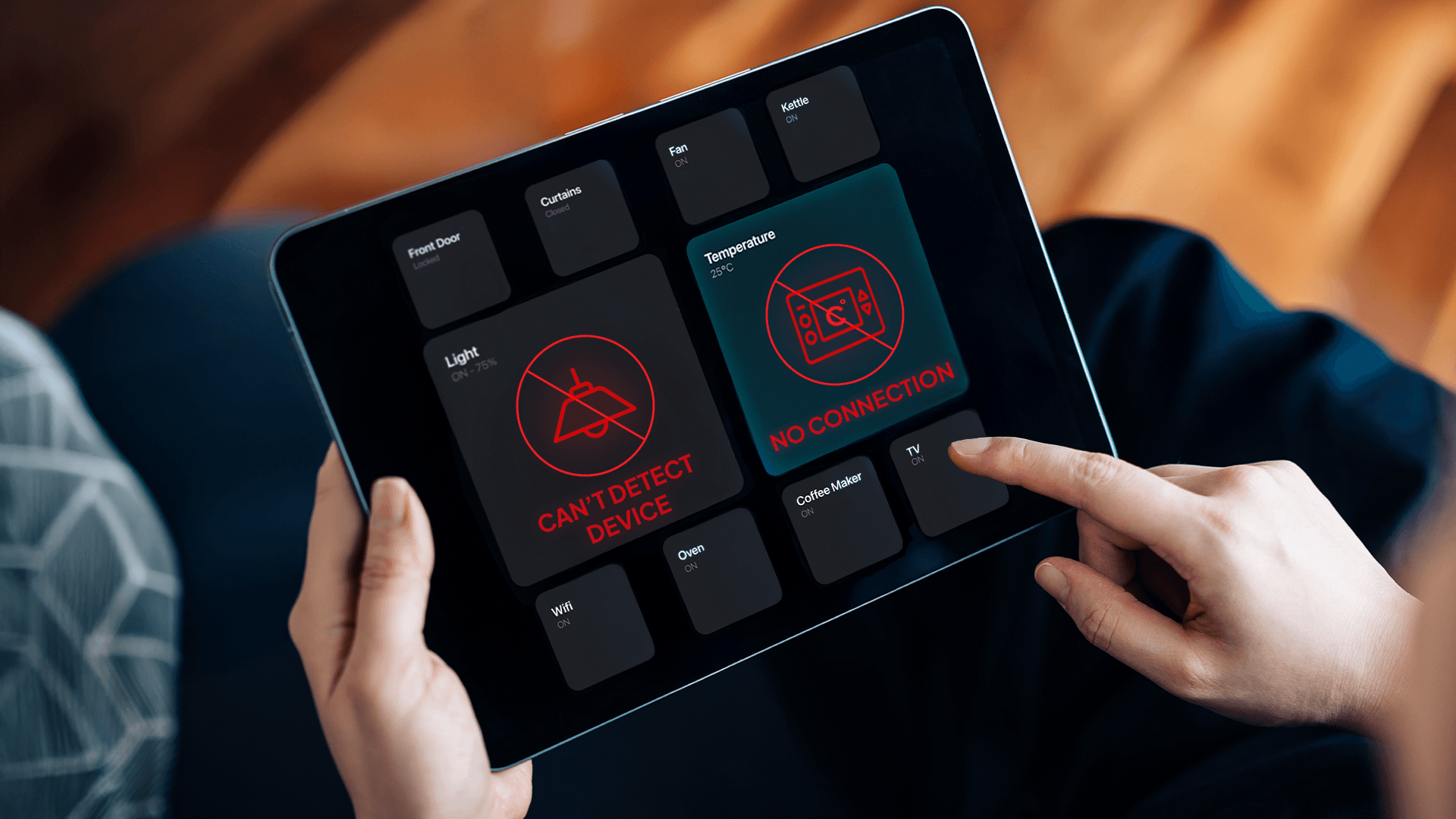
When gaps emerge in this customer journey, friction compounds quickly. In the UK, for example, consumer research found that among users who encountered problems with their IoT devices, 41% lost time resolving issues and a quarter reported emotional distress. Nearly half of affected users said that over time, they became less trusting of IoT devices altogether. Digital customer experience in IoT products affects more than just the device’s functionalities, where isolated failures could turn into lasting negative perception:
- Interoperability across devices: IoT products behaving inconsistently can limit the customers’ willingness to expand within the ecosystem, slowing adoption beyond the first device and reducing opportunities for brands to cross-sell.
- Fragmented app and platform experiences: Two in three of surveyed consumers in Asia Pacific, Europe, the UK, and North America preferred having a single UI for their IoT products. When customers are forced to navigate multiple and inconsistent UIs or unclear ownership between apps and services, their experience becomes more cognitively demanding even when the underlying technology functions correctly. For businesses, this translates into onboarding friction, lower feature utilization, and a higher likelihood of churn as customers disengage rather than troubleshoot or even reach out for technical support.
- Cross-device troubleshooting: Issues rarely sit neatly within a single IoT product. Customers now move between devices, apps, networks and support channels. In fact, 93% report higher customer satisfaction (CSAT) when interactions move seamlessly across channels. Chasing resolution across these touchpoints makes the experience feel disjointed and slow. Operationally, this drives higher cost to serve, longer resolution times and lower first-contact resolution rates.
These challenges are not isolated usability issues and can directly affect how business value is realized across the ecosystem. In fact, in a study of smart retail environments in the UK, CX quality accounted for more than 72% of what drove the customers’ intentions to continue using or expand their use of IoT-enabled products. When connected experiences feel coherent, customers are more willing to adopt additional devices and activate advanced features as well as remain engaged over time. The opportunity lies in designing for how customers experience the IoT product as a whole and not just how its components are organized internally.
From single product support to ecosystem customer experience management: A CX-led foundation for IoT products
Beyond having faster helpdesk support, a CX-led approach ensures that smart, connected products function, interact, and, above all, remain usable. Embedding digital customer experience into the IoT product’s foundation means designing how issues are anticipated, diagnosed, and resolved as part of how IoT products operate, rather than applying fixes after problems are already in motion.
This redefines what CX is responsible for. It moves IoT brands and manufacturers away from product-centric assistance toward customer experience management, where support and operational decisions are informed by how their IoT ecosystem behaves. Speed still matters but it’s only effective when paired with the right context. Understanding patterns, dependencies, and interactions across devices, platforms, and support channels matters more than closing individual tickets quickly, especially when isolated fixes can introduce new failures elsewhere in the system.
Operating this way requires the digital customer experience to function as an orchestration layer rather than a reaction point:
- From device-level support to omnichannel, system-level resolution: Issues no longer belong to the device, app, or channel where they surface. Whether a problem appears through a device alert, a mobile app or a support interaction; the resolution depends on identifying where failures originate or propagate within the ecosystem and not where the issue was reported.
- From channel-specific handling to connected experience management: In IoT environments, issues routinely span devices, platforms and support channels. Customer experience management must follow the user journey across these touchpoints, rather than handing customers between teams that each see only part of the system.
- From speed-first responses to consistency at scale: Quick responses lose value when they solve the immediate interaction but fail to prevent repeat issues across devices or channels. In connected systems, inconsistent outcomes increase rework and repeat contact.
Turning IoT innovation into scalable experiences: How TDCX enables the future of CX in the internet of things
Translating connected IoT ecosystems into reliable, scalable digital customer experiences should both be strategic and an operational priority. As systems grow more complex, brands need CX models that can diagnose issues across devices and guide resolution consistently as well as maintain clarity across channels and regions.
TDCX works with IoT brands to deliver CX designed for connected ecosystems, bringing together these core elements:
- Intelligent diagnostics grounded in data and analytics: This brings together device telemetry and interaction data to identify likely root causes across devices, platforms and environments. It helps teams move beyond symptom-based fixes toward understanding where issues originate and which dependencies are involved.
- AI-assisted workflows that guide resolution and escalation paths: They help teams balance automation with human judgment when edge cases arise or when system behavior falls outside predefined rules. For example, tools that use GenAI for CX can help synthesize signals from devices, platforms as well as prior interactions to surface relevant context and suggest appropriate next actions for frontline support teams.
- Connected experience management and CX consulting: The right strategy can transform how the digital customer experience is run across the ecosystem, including who owns complex issues, how decisions are made when problems span devices or channels, and how resolution remains consistent across regions.
This approach has proven effective even in complex IoT environments. In one engagement, we partnered with a medical technology manufacturer providing connected medical devices to support healthcare professionals responsible for responding to patient issues. TDCX delivered the CX and operational support that enabled clinicians and healthcare teams to work confidently across devices and platforms. Aligning diagnostics, workflows, and escalation paths at the system level reduced fragmentation for healthcare teams and contributed to a more reliable operation of the connected technologies that underpin the device’s patient experience.
Indeed, IoT innovation is no longer constrained by what devices can be connected, but by how reliably they operate once in use. New technologies and use cases will enter the market faster than organizations can simplify them, while connected systems will only grow more complex. The digital customer experience is what holds those systems together — and when it’s built with system-level awareness, users don’t need to navigate the complexities of how IoT ecosystems are stitched together in order to use or trust them. That discipline is grounded in how we apply data and insights, cultivate a customer-centric culture, and operate our CX models. It’s an approach that has earned us top industry recognition from the European Contact Centre & Customer Service Awards (ECCCSA) at the end of 2025, reinforcing how orchestrated execution turns connected experiences into something customers can rely on.